
Overview of demand surge
Provides an overview of the demand surge frameworks supported in Verisk Synergy Studio v1.0.0.
As of the June 2026 model release in Verisk Synergy Studio, three demand surge frameworks are supported across the model suite:
- standard demand surge, also known as industry loss-based or legacy demand surge
- enhanced U.S. demand surge for select U.S. models (first implemented in Touchstone v11.0), also referred to in Verisk Synergy Studio v1.0.0 as global demand surge
- enhanced European demand surge for select EU models, again also referred to in Synergy Studio v1.0.0 as global demand surge
What is demand surge
Demand surge is the temporary increase in reconstructions costs for materials and services required to repair and rebuild property damaged by catastrophic events. These are costs that may occur after a catastrophe due to a sudden imbalance between the demand for repairs and the supply of construction resources. Demand surge is associated with temporary price inflation for these resources, resulting in increased losses to the insurers.
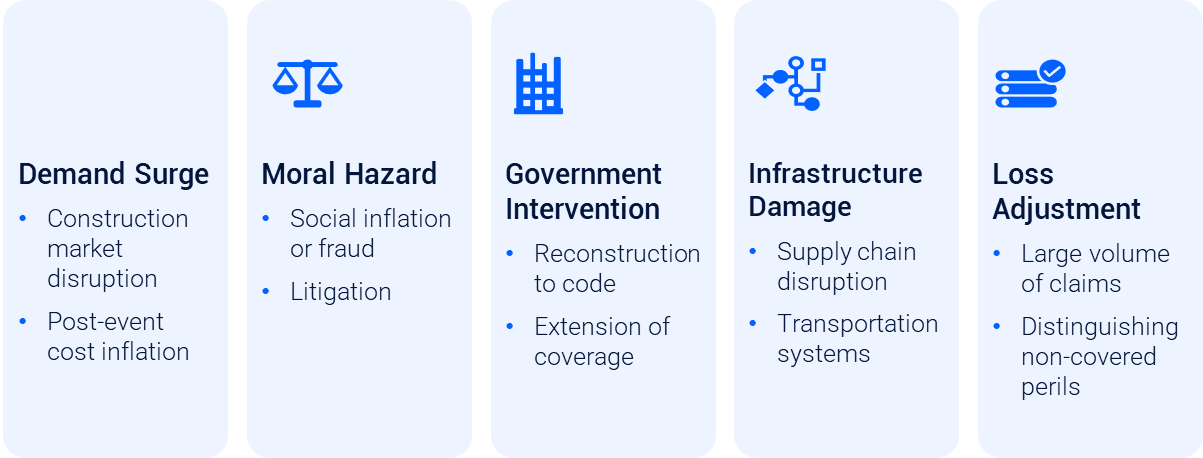
From an insurance perspective, demand surge can increase insured losses by driving up construction labor wages and material costs and delaying reconstruction, ultimately increasing the cost of claims. Demand surge is one component of the broader concept of loss inflation. The following figure shows the multiple sources of loss inflation that can affect catastrophe claims. These include: demand surge, moral hazard, government intervention, Infrastructure damage, loss adjustment complexity.
At Verisk, demand surge allows users to assess the impact of demand surge on loss potential.